Roof Replacement
Complete tear-off and replacement for roofs at the end of their service life. Every layer is inspected and rebuilt, not just the visible surface.
Learn more
Roofing service
The roof edge holds the gutters, closes the assembly and feeds the attic its air, so rot there affects more than appearance.
Roof-edge work coordinated with ventilation and roofing condition, so the repair functions as part of the roof system rather than as trim.
Soffit vents are where an attic draws its air. Blocked or rotted soffit is a ventilation failure as much as a cosmetic one, and it gets treated that way.
Fascia rots for a reason, usually water escaping behind a gutter or off a badly detailed roof edge. Replacing the board without fixing that just resets the clock.
Gutters fasten into fascia. Sound fascia is what keeps a gutter hanging where it was installed, particularly when it fills with water and debris.
Older Victoria homes often have moulded fascia and detailed eaves. Replacement is matched to the existing profile rather than flattened to standard stock.
The roof edge is the least glamorous part of a building and one of the busiest. It carries the gutters, closes off the end of the roof assembly, keeps wind-driven rain out of the eave, and on most homes it is the only place the attic can draw fresh air.
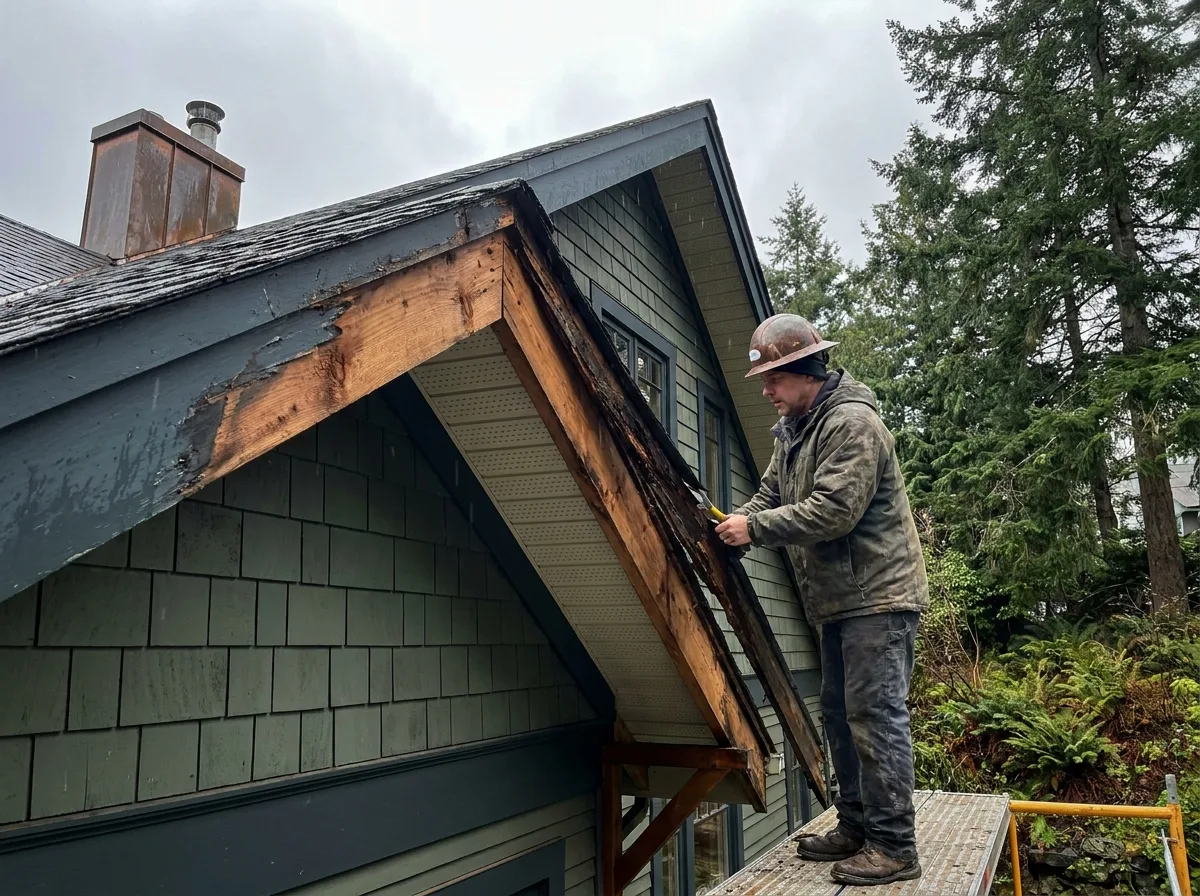
Fascia rot announces itself politely at first: paint lifting in a patch, a dark stain at a joint, a board that sounds hollow when tapped. Underneath, the wood has usually been wet for a long time. By the time a section is visibly sagging or crumbling, the rot has typically reached the rafter tails behind it and the repair is larger than the appearance suggests.
Probing settles it. A screwdriver into a suspect area tells you in seconds whether you are dealing with a surface finish problem or structural rot, and it is worth doing before pricing any repair.
Fascia does not rot spontaneously in a climate with dry summers. It rots because water is being delivered to it.
Gutter overflow. Debris-packed gutters spill over the back edge rather than the front, running straight down the face of the fascia and into the joint at the top.
Missing or misset drip edge. Without properly detailed edge metal, water running off the roofing can track back under the shingle edge and behind the fascia by surface tension, which leaves no visible sign until the wood fails.
Blocked valleys. A valley packed with fir needles discharges at the eave in a concentrated stream during heavy rain, and the fascia beneath it takes the whole load.
This is the part that turns a trim problem into a roofing problem. Attics are ventilated by drawing cool air in at the soffits and exhausting warm moist air near the ridge. Rot repairs done in a hurry frequently close off the soffit venting, and insulation pushed into the eave during a top-up does the same thing.
Kill the intake and the exhaust vents cannot move air, no matter how many of them there are. In a damp coastal climate the result is condensation on the underside of the sheathing through the winter, and eventually decking rot that presents exactly like a leak.
The pre-1940 stock in Fairfield, James Bay and Oak Bay often carries moulded fascia, boxed eaves and decorative brackets. Those details can be matched, and on a heritage streetscape it is usually worth doing rather than replacing with flat stock.
Fix the water source, replace what has gone, restore the venting, reinstate the drip edge and rehang the gutters into sound wood. Quotes are free and detailed, and crews are licensed, insured and WorkSafeBC covered.
How it works
Four steps, in the order they actually happen.
We find out why the rot started, whether from gutter overflow, a missing drip edge, blocked drainage or a roof edge detail that lets water in behind.
Rot spreads further than it shows. Adjacent boards, rafter tails and the roof edge are probed so the scope covers the damage rather than the visible part.
Damaged sections are removed, rafter tails are repaired where needed, and new fascia and soffit are installed with the profile and venting the eave requires.
Drip edge, gutters and soffit venting are refitted correctly so the edge sheds water outward and the attic keeps drawing air.
Roof condition
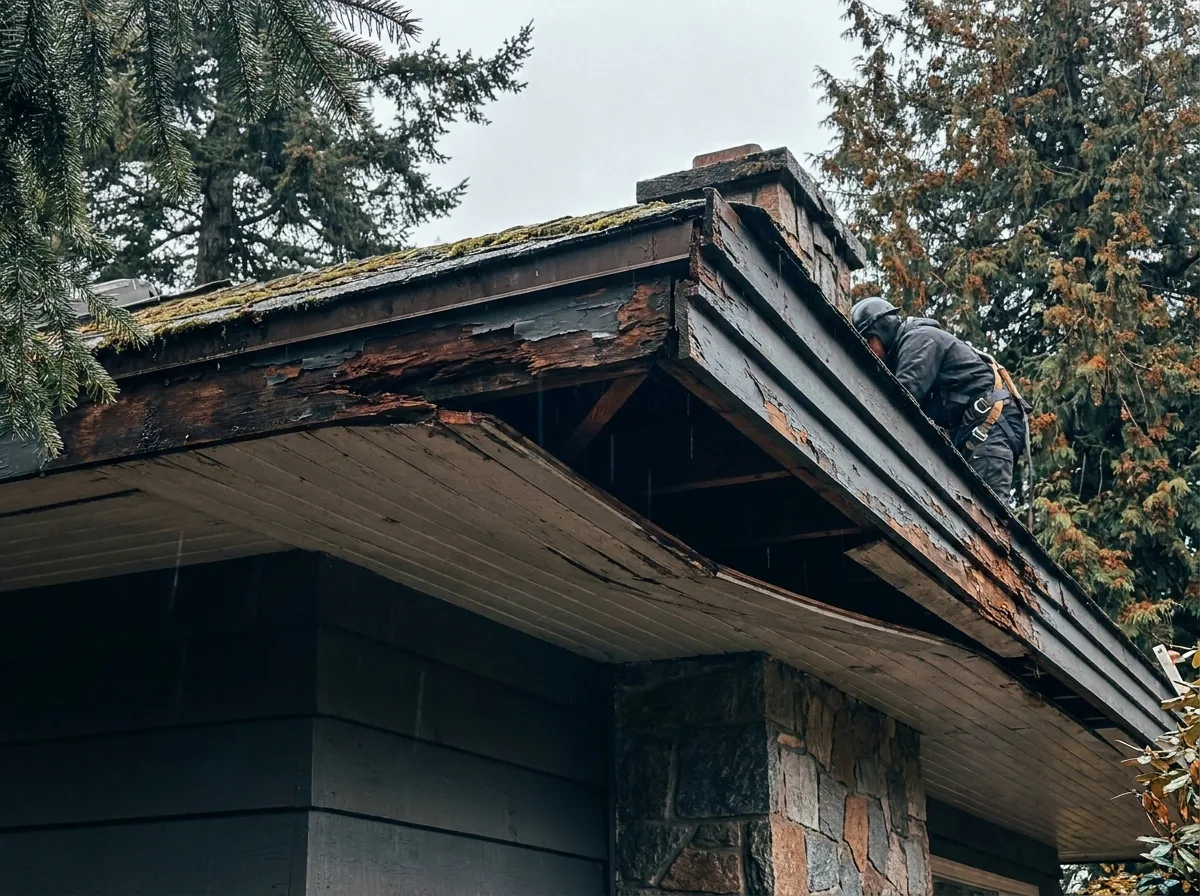
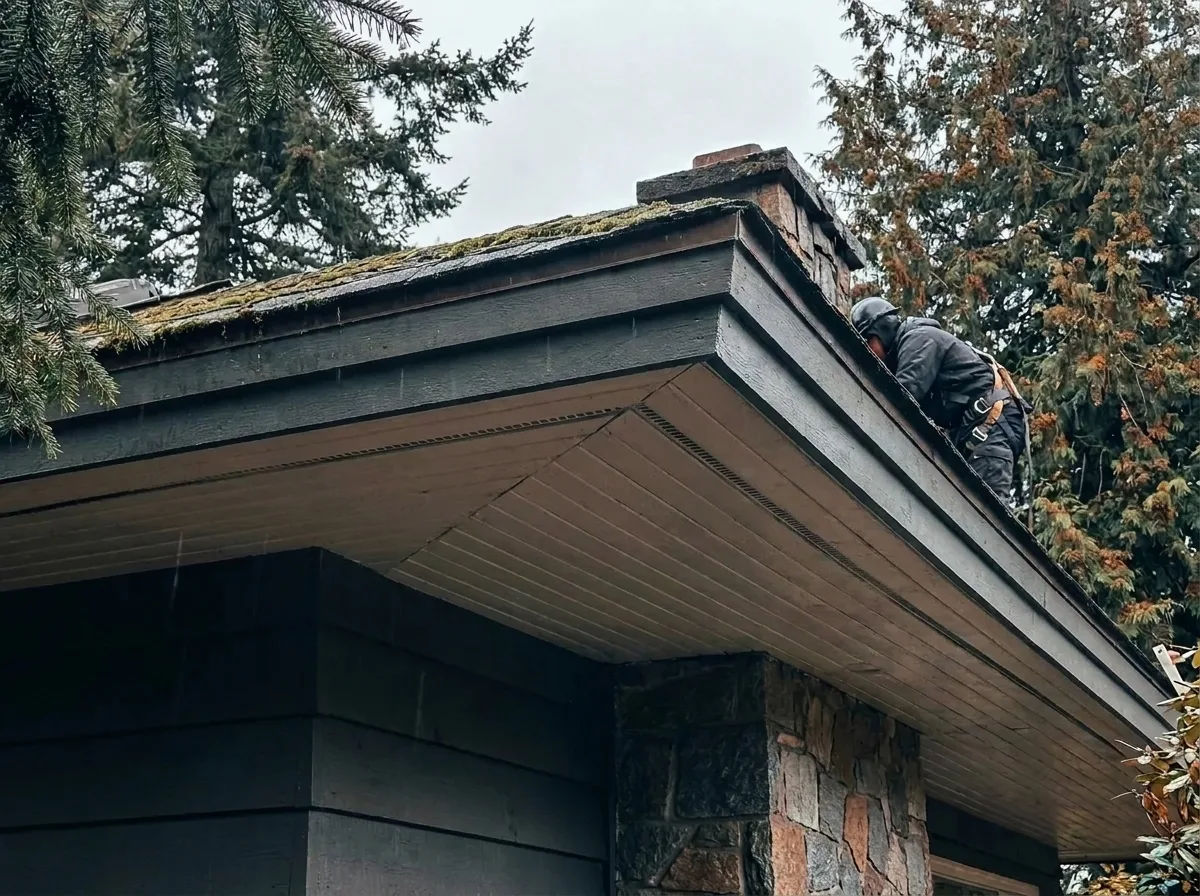
Deteriorated roof-edge trim beside replaced fascia and soffit. Rot at the edge is usually a drainage or ventilation symptom rather than the cause.
Photographs are illustrative of typical roof conditions in Greater Victoria and are not a record of work performed by Capital Roofing Victoria.
Questions, answered
Persistent water where it should not be. Overflowing or leaking gutters, missing or badly set drip edge that lets water track back behind the fascia, and blocked valleys spilling at the eave. The region's long damp shoulder seasons mean these boards rarely get a chance to dry out fully.
Localized rot at a joint or an end can often be cut out and pieced in. Once softness runs along a length or has reached the rafter tails behind it, replacement of that run is the durable answer. Probing the board tells you which case you have, since surface paint hides a great deal.
Most attics draw intake air through vents in the soffit and exhaust it near the ridge. If soffit vents are painted over, blocked by insulation or rotted and covered during a repair, the intake half stops working. Exhaust vents alone cannot move air without intake to feed them.
Where possible, yes. The roof edge has to be lifted to set drip edge and reinstate the detailing correctly, so doing both together avoids disturbing new roofing later. It is also the only convenient moment to correct soffit intake ventilation while the eave is open.
It can, and it reduces maintenance and gives consistent intake venting. On heritage properties the choice deserves thought, since original moulded eave detailing is part of the building's character and some neighbourhoods have design expectations. Matching wood is entirely possible where appearance matters.
Related work
Complete tear-off and replacement for roofs at the end of their service life. Every layer is inspected and rebuilt, not just the visible surface.
New gutter systems designed and installed to move roof water away from the building, sized for Greater Victoria's winter rainfall.
Assessment, installation and improvement of attic and roof ventilation so air moves through the assembly instead of condensing inside it.
Tell us your name, how to reach you and what the roof is doing. We will come and look at it, then put the scope, the materials and the labour in writing before anything begins.
Mon–Fri 7:00am–5:00pm · Saturday by appointment
Thank you — your enquiry has come through. We will be in touch to arrange a site visit and go over the details. If the situation is urgent, call us directly rather than waiting on a reply.
(778) 562-5640Ready when you are
Book an assessment of the roof edge and get a written quote covering the full extent.