Roof Repair
Focused repairs to shingles, flashing, vents and roof penetrations that restore weather protection without replacing a roof that still has life in it.
Learn more
Roofing service
Storm damage and sudden leaks do more harm the longer they go unaddressed, so the first priority is always stopping the water.
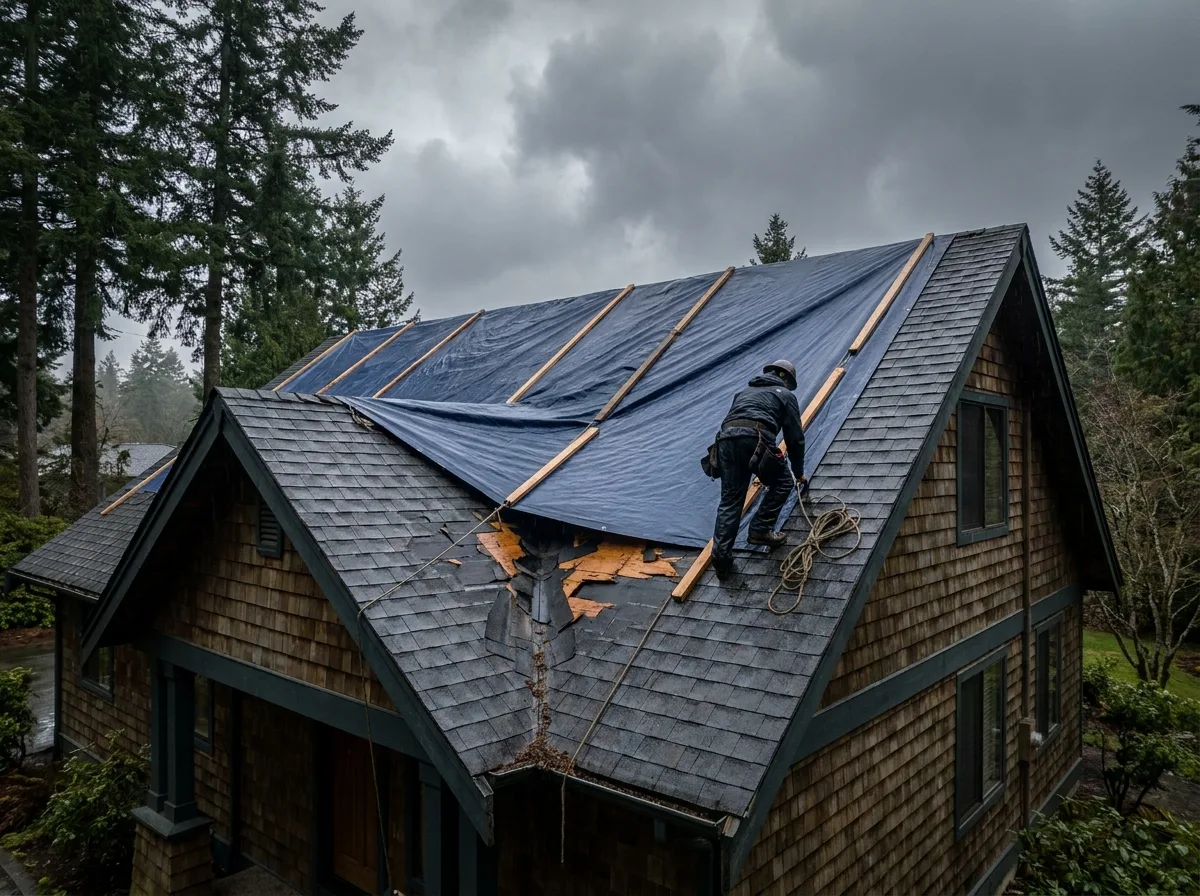
The priority is stopping active water intrusion and making the roof secure, with the permanent repair completed once the building is protected.
Call, email or send the form. Tell us what is happening and where the water is coming in, and we will get back to you as quickly as we can.
The immediate job is halting intrusion and securing anything loose. Everything else, including the final repair specification, follows once the building is protected.
What failed and what it damaged is photographed while it is visible, which is useful for you, for the permanent repair and for any insurance conversation.
Storm work means compromised roofs, wet surfaces and wind. Crews are licensed, insured and WorkSafeBC covered rather than whoever happens to be available.
There is a particular sound a roof makes when part of it lets go in a gale, and a particular feeling that follows when you find water tracking down an interior wall at two in the morning. At that point the roofing question is secondary. The only thing that matters is stopping more water getting in.
Water does not pause. It saturates insulation, which then holds moisture against the sheathing. It runs along framing into wall cavities. It soaks drywall until it sags, and given a few damp days in an unventilated space, it starts mould. The difference between a contained incident and a large restoration job is usually how quickly the opening was covered.
That is why emergency work is deliberately split in two. The first visit makes the building safe and dry. The considered repair follows, once the roof can be assessed properly in daylight and reasonable weather.
The heavy weather runs with the October to March rainfall, and the wind comes off Juan de Fuca Strait in sustained blows rather than brief squalls. The failures that follow are consistent: ridge caps and field shingles lifted along exposed slopes, flashing peeled back at wall junctions, gutters torn loose by water weight and debris, and limbs down from Douglas fir and Garry oak onto roofs they have overhung for decades.
Older roofs fail first. Shingles that have gone brittle with age lose their seal strip bond and lift in one piece, and a cedar shake roof past its service life sheds shakes in numbers once the wind gets under them.
Not every emergency arrives with a bang. A valley packed with needles during a downpour dams water sideways under the roofing and floods an attic in a single night. So does a blocked downpipe backing water up behind a fascia. These look like nothing from the driveway.
Temporary protection done well is real work. Covering is secured against continuing wind rather than weighted down and hoped for, loose material is removed so it does not become airborne, and the covered area is arranged so water still drains off the roof instead of pooling behind the repair.
Once the building is protected, the roof gets assessed in full, including the attic side where it can be reached, because storm damage regularly extends past the obvious hole. You get photographs, a plain explanation, and a written quote for the lasting fix. Crews are licensed, insured and covered by WorkSafeBC.
If water is coming in, contact us by phone, by email, or through the form on the contact page. Tell us what is happening, where the water is entering, and whether anything looks structurally unsafe. We will get back to you as quickly as we can, and where it helps we will talk you through what to do in the meantime.
How it works
Four steps, in the order they actually happen.
We ask what is happening, where the water is entering and whether anything is structurally unsafe, so the crew arrives with the right materials.
Loose material is secured, debris is removed where it is safe to do so, and the opening is covered or temporarily sealed to stop water getting in.
Once the immediate risk is handled, the roof and, where accessible, the attic are inspected to find damage that is not visible from the ground.
You receive a written quote for the lasting repair, along with a clear account of what caused the failure and what it affected.
Questions, answered
Water actively entering the building, a section of roofing lifted or torn off, a tree limb through the roof, or anything structurally unsafe. A ceiling stain that has been slowly growing for months is urgent but not an emergency, and is usually better handled as a scheduled leak investigation.
Move furniture and valuables out of the affected area and put containers under active drips. If a ceiling is bulging with trapped water, a relief hole at its lowest point drains it in a controlled way. Stay off the roof, especially in wind, rain or on a mossy surface.
Whichever protects the building fastest and safest under the conditions. In darkness, high wind or heavy rain, securing and covering the area is the right first move, with permanent repairs done once conditions allow. Where the fault is small and accessible, it may be repaired immediately.
Sudden storm damage is commonly covered while gradual deterioration and deferred maintenance generally are not, though policies differ. Photographing the damage before and after the temporary work, and keeping the written assessment, gives your insurer the documentation they will ask for.
Greater Victoria's storm season runs with the heavy October to March rainfall, and windstorms coming off the strait combine sustained rain with gusts. Add saturated Garry oak and Douglas fir limbs overhanging roofs, and winter delivers both the wind loading and the falling debris.
Related work
Focused repairs to shingles, flashing, vents and roof penetrations that restore weather protection without replacing a roof that still has life in it.
Investigation and repair of active or recurring roof leaks, tracing water intrusion back to where it genuinely enters the roof assembly.
A close assessment of roofing materials, flashing, ventilation, drainage and penetrations, with findings you can actually plan around.
Tell us your name, how to reach you and what the roof is doing. We will come and look at it, then put the scope, the materials and the labour in writing before anything begins.
Mon–Fri 7:00am–5:00pm · Saturday by appointment
Thank you — your enquiry has come through. We will be in touch to arrange a site visit and go over the details. If the situation is urgent, call us directly rather than waiting on a reply.
(778) 562-5640Ready when you are
Call, email or send the form and we will get back to you as quickly as we can.