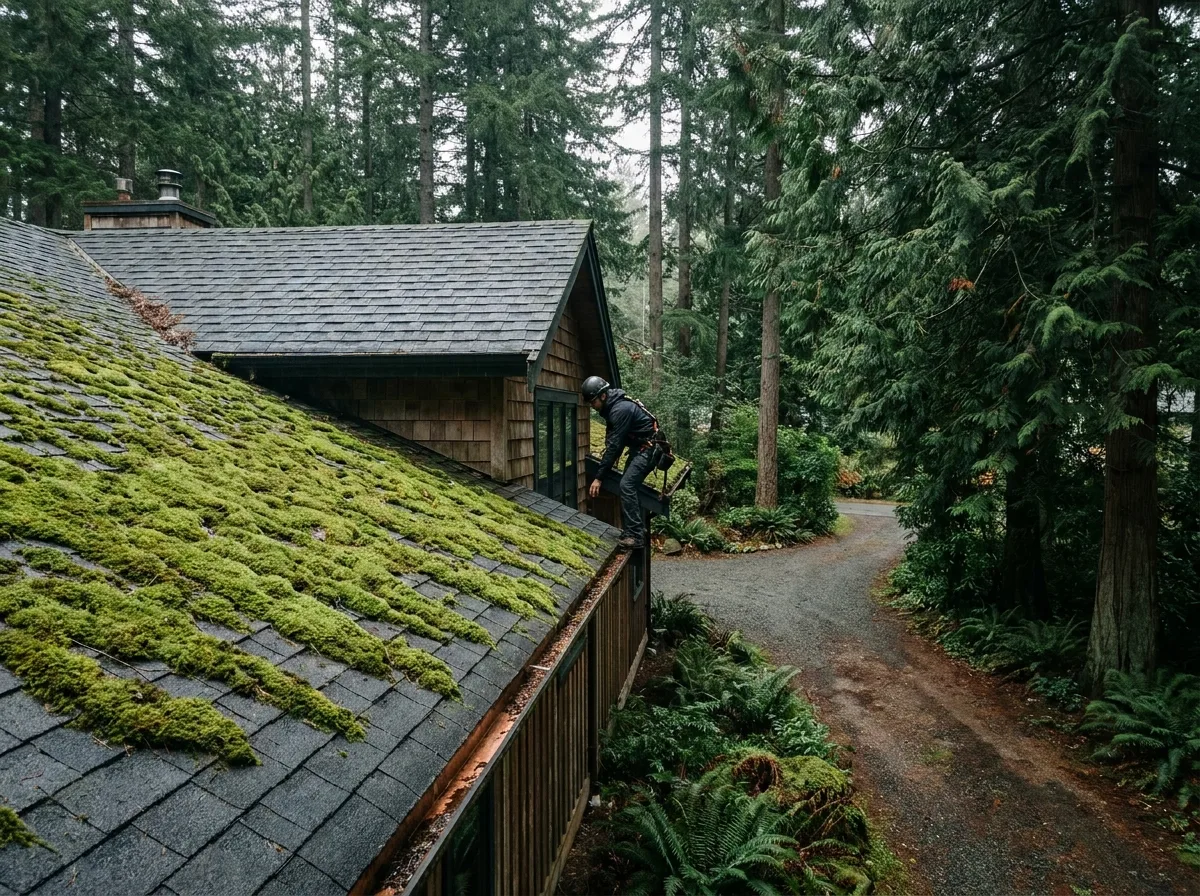
Roof Inspection
A close assessment of roofing materials, flashing, ventilation, drainage and penetrations, with findings you can actually plan around.
Learn more
Roofing service
Moss on a Greater Victoria roof is not a cosmetic issue, it is a moisture problem sitting directly on your shingles.
A roofing-first approach that works around the condition of the roofing material and avoids the pressure washing that causes lasting damage.
High pressure strips granules, drives water under shingle courses and takes years off a roof. Removal is done by methods the roofing can survive.
A brittle roof at the end of its life is handled differently from a sound one. The method follows the material, not a standard routine.
Moss, needles and debris are cleared from valleys, gutters and outlets, since removing the growth and leaving the blockage solves half the problem.
The conditions that let moss thrive, shade, debris load and poor drying, are identified so you know what actually reduces how fast it returns.
Look at almost any roof in Greater Victoria from the north side and you will find moss. Thin and green in the shingle grooves on a newer roof, thick spongy cushions along the courses on an older one. This is not neglect. The climate here is close to perfect for it.
Mild wet winters, long damp shoulder seasons and only a short dry stretch in summer. Add mature Douglas fir and Garry oak canopy over a great many properties, and north-facing slopes spend most of the year shaded, cool and damp. Moss and algae are a defining local roofing condition, not an occasional nuisance.
It holds water. Moss acts as a sponge sitting directly on the roofing. Instead of drying between rains, the surface underneath stays permanently wet, which accelerates the breakdown of asphalt shingles and keeps wooden roofing saturated.
It lifts the courses. As a cushion thickens, it physically levers up the lower edges of the shingles above it. A lifted edge gives wind-driven rain a way underneath, which is how moss turns into a leak.
It takes the granules. The rhizoids that anchor moss work into the granule layer, and each removal cycle takes some of that protective surface away. Those granules are what shields the asphalt from UV, so losing them shortens the roof’s remaining life.
It blocks drainage. Dislodged moss washes into valleys, gutters and downpipes, where it combines with fir needles to form a dam that holds water on the roof.
A pressure washer clears moss dramatically and fast, and it is the most common way roofs get damaged around here. High pressure strips granules wholesale, drives water up under the shingle courses in the wrong direction, can lift fasteners and, on old cedar, tears out the softened wood fibre.
The roof looks transformed for a season. It has also lost years of service life, and the granule loss shows up later as accelerated ageing across the cleaned slopes.
Sound roofing tolerates more than brittle roofing. A shingle roof near the end of its service life may not survive any thorough cleaning intact, and in those cases the honest answer is that removal is not the right spend and the roof needs assessing for replacement instead.
Cleaning treats the symptom. Reducing overhanging branches to let more light and air onto the slopes, keeping valleys and gutters clear of needle load, and dealing with anything holding debris on the roof all lengthen the interval between visits.
Quotes are free and detailed. Crews are licensed, insured and covered by WorkSafeBC.
How it works
Four steps, in the order they actually happen.
Shingle condition, brittleness, granule loss and the extent of growth are checked first, because a failing roof cannot be cleaned aggressively without damage.
Moss is lifted using methods appropriate to the material and its condition, always working with the direction of the courses, never against them.
Valleys, gutters and downpipes are cleared of the dislodged moss and accumulated debris so water leaves the roof properly afterward.
With the surface clear, the roof is inspected for damage the moss was hiding, and anything needing attention is reported in writing.
Roof condition
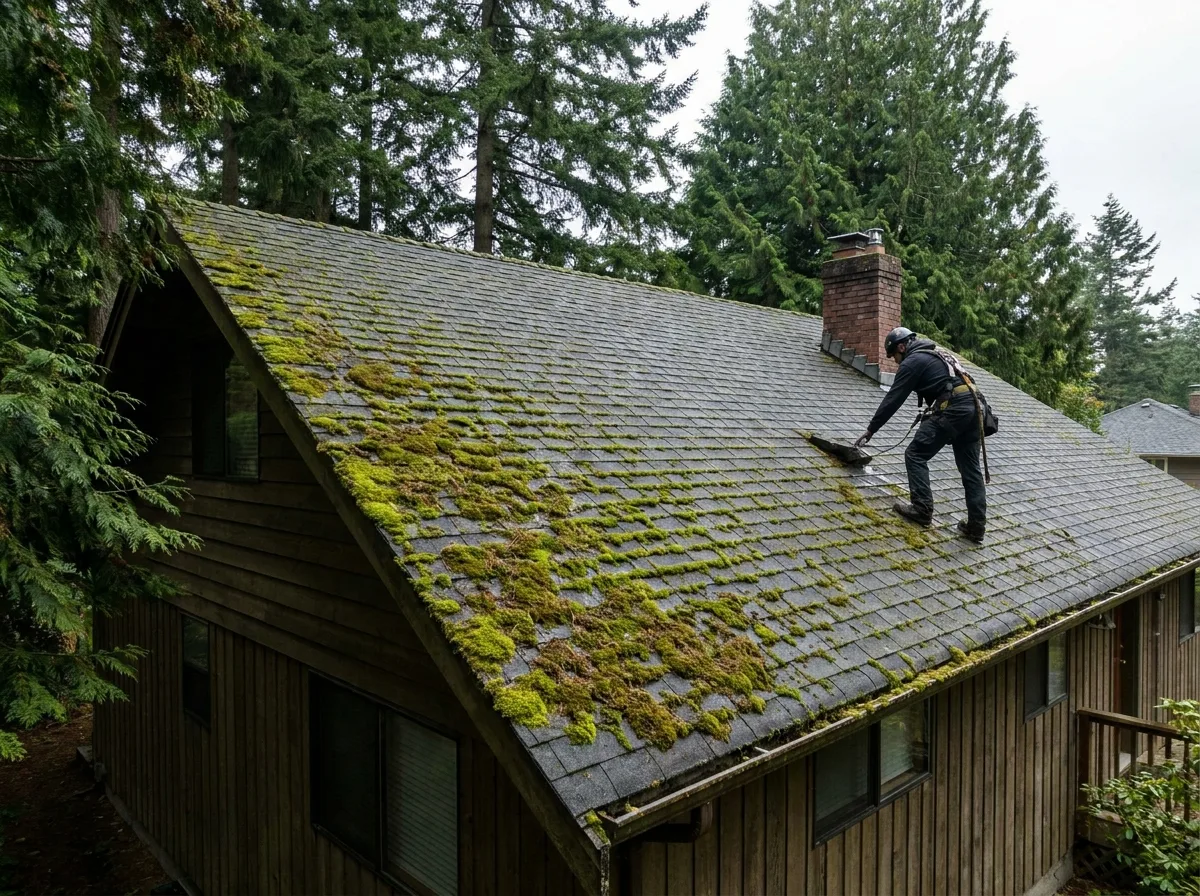
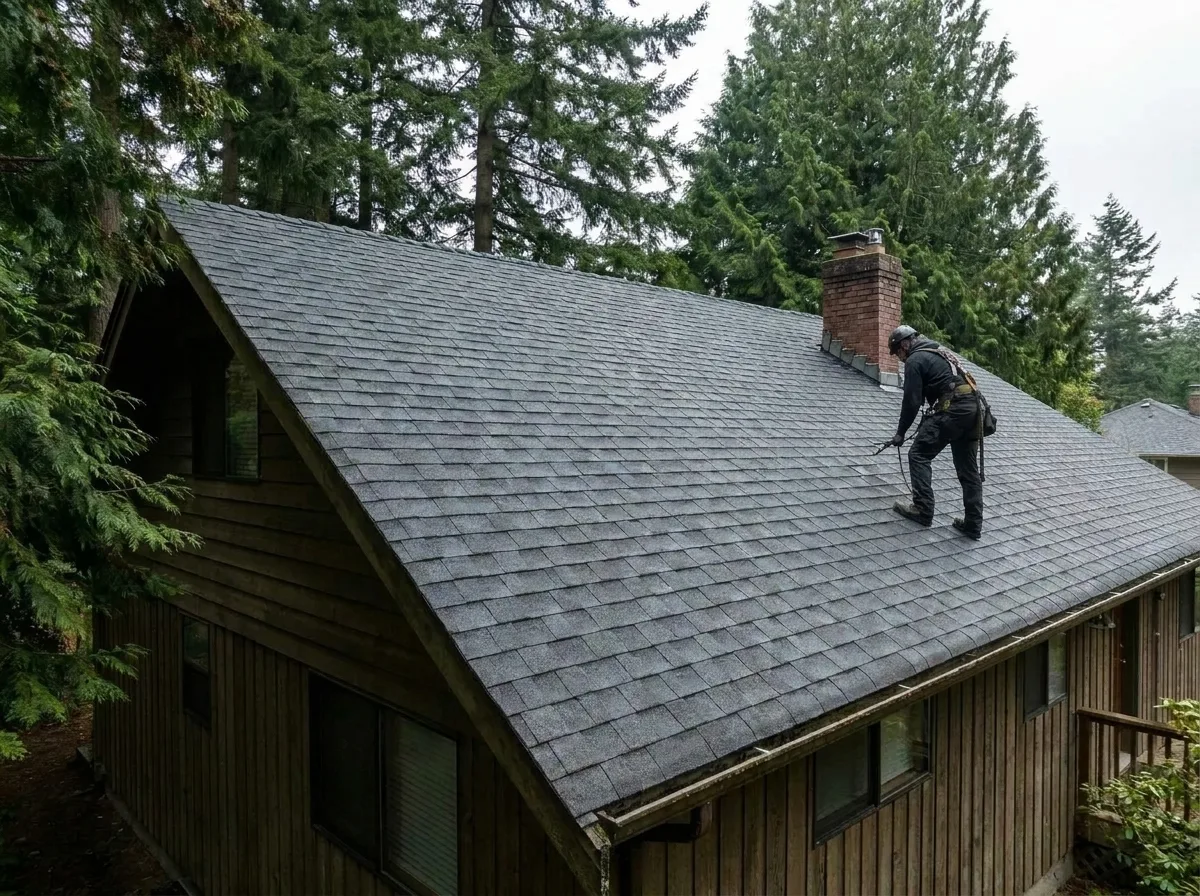
Heavy moss on a shaded north slope beside a cleared roof. In this climate moss is a recurring condition, not a one-off event.
Photographs are illustrative of typical roof conditions in Greater Victoria and are not a record of work performed by Capital Roofing Victoria.
Questions, answered
The mild damp climate is close to ideal for it. Cool wet winters, long humid shoulder seasons and mature tree cover mean north-facing slopes stay shaded and damp for most of the year. Moss here is endemic rather than occasional, and it grows back faster than in drier parts of the country.
It causes real damage. Moss holds water permanently against the shingle surface and edges, preventing the roof from ever drying properly. As it thickens it lifts the shingle edges, letting wind-driven rain track underneath, and its root structure works into the granule layer and pulls granules away.
Pressure washing is the most common way roofs are damaged in this region. It blasts off the granule layer that protects the asphalt from UV, forces water up under the courses and can loosen fasteners. It looks effective immediately and shortens the roof's life considerably.
It depends almost entirely on shade and tree cover. A sunny exposed roof may need it every few years, while a north-facing slope under Douglas fir can need attention annually. Keeping branches trimmed back and debris cleared makes more difference to the interval than anything applied to the roof.
Not on its own. Removal often reveals the damage the growth was concealing, such as lifted or cracked shingles and deteriorated flashing. That is useful, because it means the roof can then be inspected and repaired properly, but clearing moss is prevention rather than a leak repair.
Related work
A close assessment of roofing materials, flashing, ventilation, drainage and penetrations, with findings you can actually plan around.
Scheduled preventive maintenance that finds and corrects minor roofing faults before they turn into leaks, rot and replacement bills.
Repairs to leaking, sagging, loose, blocked or poorly draining gutters, downpipes and outlets across Greater Victoria.
Tell us your name, how to reach you and what the roof is doing. We will come and look at it, then put the scope, the materials and the labour in writing before anything begins.
Mon–Fri 7:00am–5:00pm · Saturday by appointment
Thank you — your enquiry has come through. We will be in touch to arrange a site visit and go over the details. If the situation is urgent, call us directly rather than waiting on a reply.
(778) 562-5640Ready when you are
Book moss removal done around the condition of your roofing, not against it.