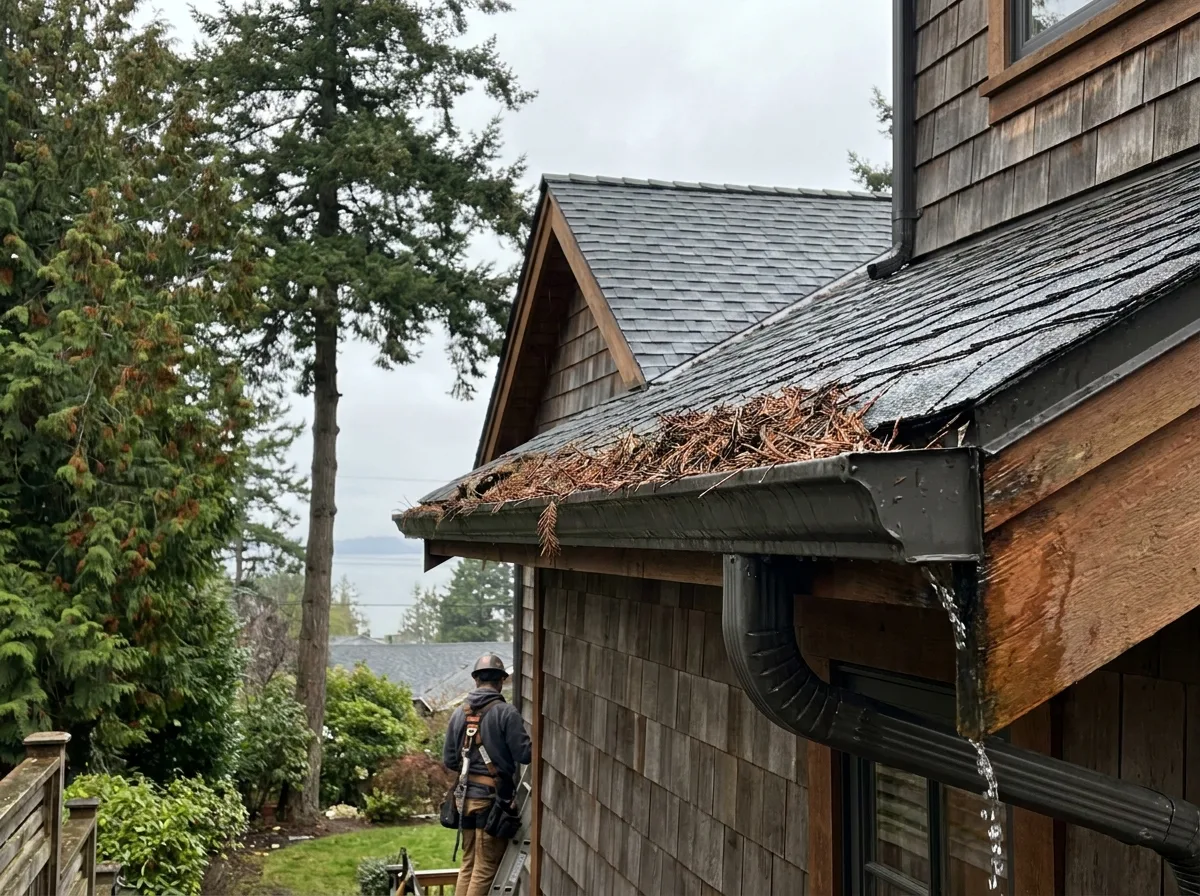
Gutter Installation
New gutter systems designed and installed to move roof water away from the building, sized for Greater Victoria's winter rainfall.
Learn more
Roofing service
Overflowing gutters are usually a symptom, and replacing the section that failed rarely stops it happening again.
Fixing the underlying drainage fault wherever possible, instead of swapping out the length of gutter where the problem happened to show.
A gutter that overflows at the same corner every winter has a fall, capacity or outlet problem. Replacing that length changes nothing.
Sagging runs and reversed slope are reset to drain toward the outlets, which is the fix that actually stops standing water and the leaks it causes.
Blockages are usually below the gutter, in the outlet or the downpipe itself. Those get cleared and checked rather than assumed to be fine.
Loose gutters often mean rotted fascia. That is identified during the repair, because new fasteners into soft wood will let go again.
You notice gutters when they fail, usually as a curtain of water off the front edge during a downpour, or a dark stripe down the siding, or the sound of dripping somewhere behind the fascia long after the rain has stopped.
Almost every gutter complaint traces back to one of four causes, and telling them apart matters because the repairs are not interchangeable.
Blockage. The commonest by far. Debris packs the outlet or the downpipe, and the gutter fills, holds water and spills. Clearing resolves it, but if it recurs every few months the tree cover and outlet size are the real subject.
Fall. A run that has sagged, or was never hung with consistent slope, holds standing water mid-length. That water is heavy, it works at every joint, and it never leaves. This is corrected by re-hanging, not by resealing.
Capacity. A gutter that is simply too small for the roof draining into it, or served by too few downpipes. It performs fine most of the year and overflows in every serious storm. No amount of repair fixes this. It needs a layout change.
Fastening. Hangers pulling out, usually because the fascia behind them has gone soft from water running behind the gutter for years.
Douglas fir needles are the difficult case in this region. They are small enough to pass through most guard products, dense enough to mat solid at outlets, and they keep falling long after deciduous leaf drop is over. Garry oak adds leaves and, in the right conditions, a slow accumulation of organic silt that grits up the bottom of the run.
Under heavy tree cover, the practical target is not a debris-free gutter. It is a system with outlets large enough and accessible enough that clearing is quick and can happen twice a year without drama.
Water spilling behind a gutter rots fascia, and fascia rot spreads to soffit. Soffit on most homes carries the intake ventilation for the attic, so a long-running gutter fault eventually becomes a ventilation fault, and a ventilation fault in a damp coastal climate becomes condensation and sheathing rot.
Fixing the gutter early is the cheap end of that sequence. Quotes are free and detailed, and crews are licensed, insured and WorkSafeBC covered.
How it works
Four steps, in the order they actually happen.
We identify where the overflow, leak or sag is occurring and work out whether the cause is blockage, fall, capacity or fastening.
Gutters, outlets and downpipes are cleared of needles, leaves and grit, then flushed so the actual drainage performance can be seen.
Joints are resealed, hangers replaced or added, fall reset, damaged sections replaced and downpipes resecured or rerouted as required.
The repaired system is water tested, and you are told plainly whether it is now sound or whether capacity is the underlying limitation.
Roof condition
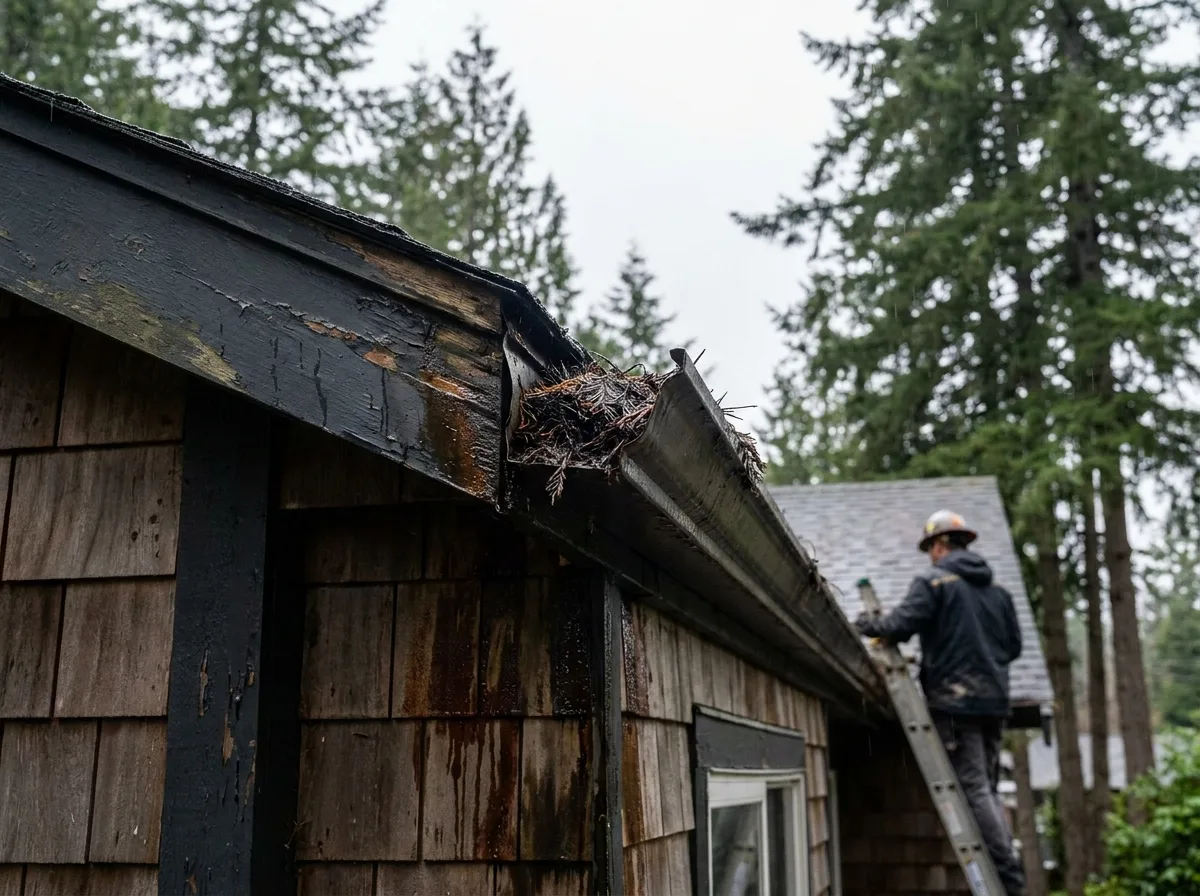
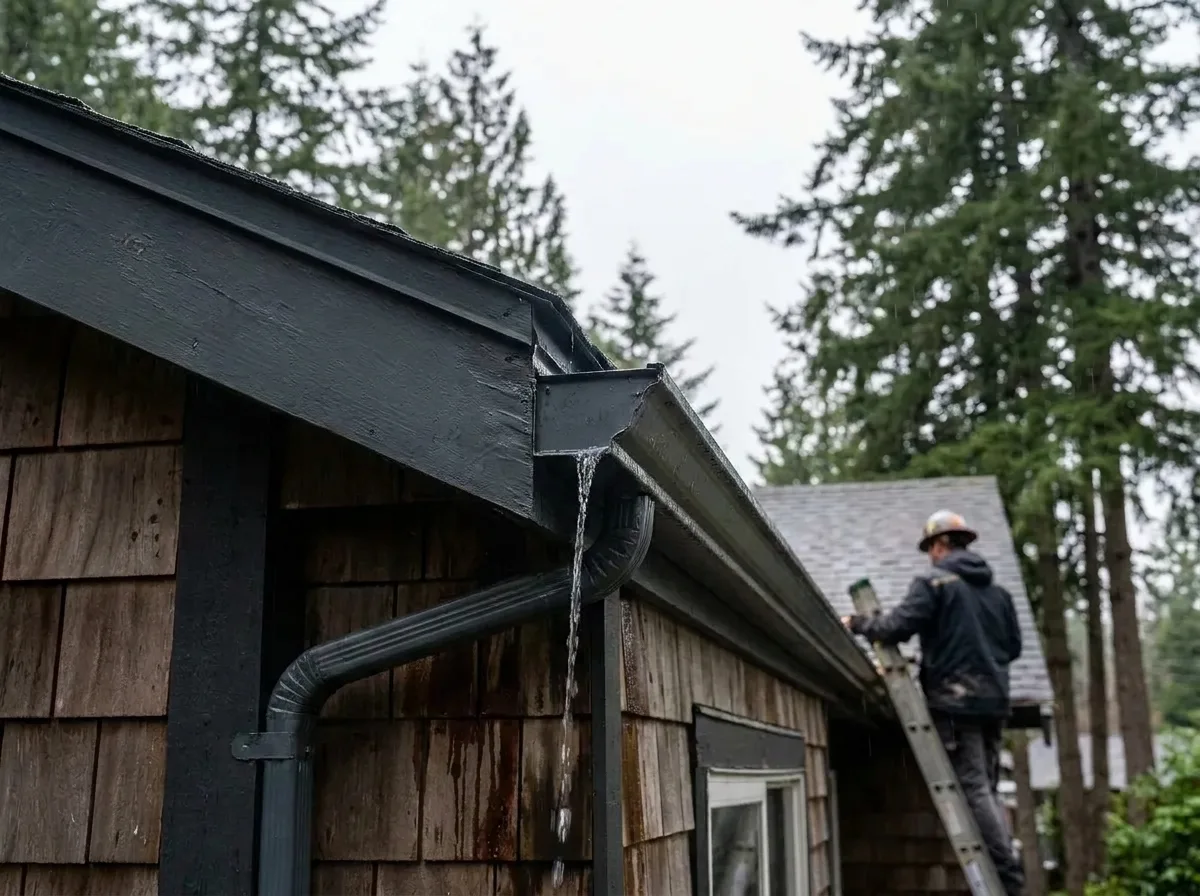
A blocked, sagging gutter beside a corrected run. Douglas fir and Garry oak debris is the usual cause of failed drainage here.
Photographs are illustrative of typical roof conditions in Greater Victoria and are not a record of work performed by Capital Roofing Victoria.
Questions, answered
Cleaning removes debris but does not add capacity or fix fall. If a long run serves a large steep roof through one downpipe, or the gutter has sagged so water pools mid-run, it will overflow in heavy rain regardless of how clean it is. That is a layout problem, not a maintenance one.
Individual joints, end caps and outlet connections can usually be cleaned back and resealed successfully. Replacement makes more sense when the material itself has corroded, when a run has been damaged along its length, or when the same joints have already been resealed several times.
Weight and rot, in that order. Debris-packed gutters holding water are extremely heavy, which levers the hangers out. Underneath that, fascia softened by water running behind the gutter no longer holds fasteners. Refastening into rotted fascia is temporary, so the fascia has to be dealt with first.
Once a year for most homes, in autumn before the wet season. Properties under Douglas fir or Garry oak generally need two visits, since needle drop packs outlets solid and continues well past leaf fall. Needles are the persistent problem here because they slip past most guards.
Less than in colder parts of Canada, but not zero. Greater Victoria gets occasional cold snaps and wet heavy snow, and a gutter already full of debris and standing water freezes as a solid mass. The added weight on hangers already loaded is what causes damage, which is another argument for clearing before winter.
Related work
New gutter systems designed and installed to move roof water away from the building, sized for Greater Victoria's winter rainfall.
Repair and replacement of rotted or damaged soffit and fascia, restoring the roof edge along with the ventilation and drainage that depend on it.
Careful moss removal that protects roofing material while clearing the growth that shortens roof life on our damp north-facing slopes.
Tell us your name, how to reach you and what the roof is doing. We will come and look at it, then put the scope, the materials and the labour in writing before anything begins.
Mon–Fri 7:00am–5:00pm · Saturday by appointment
Thank you — your enquiry has come through. We will be in touch to arrange a site visit and go over the details. If the situation is urgent, call us directly rather than waiting on a reply.
(778) 562-5640Ready when you are
Book a gutter assessment and find out what is really causing the water to spill.