Roof Inspection
A close assessment of roofing materials, flashing, ventilation, drainage and penetrations, with findings you can actually plan around.
Learn more
Roofing service
In a damp coastal climate, a poorly ventilated attic rots its own sheathing from underneath and looks exactly like a roof leak.
Ventilation designed around your actual roof configuration and attic, rather than adding the same vents to every property regardless of layout.
Vents only work in pairs. Adding exhaust without soffit intake to feed it can make airflow worse by pulling conditioned air out of the house instead.
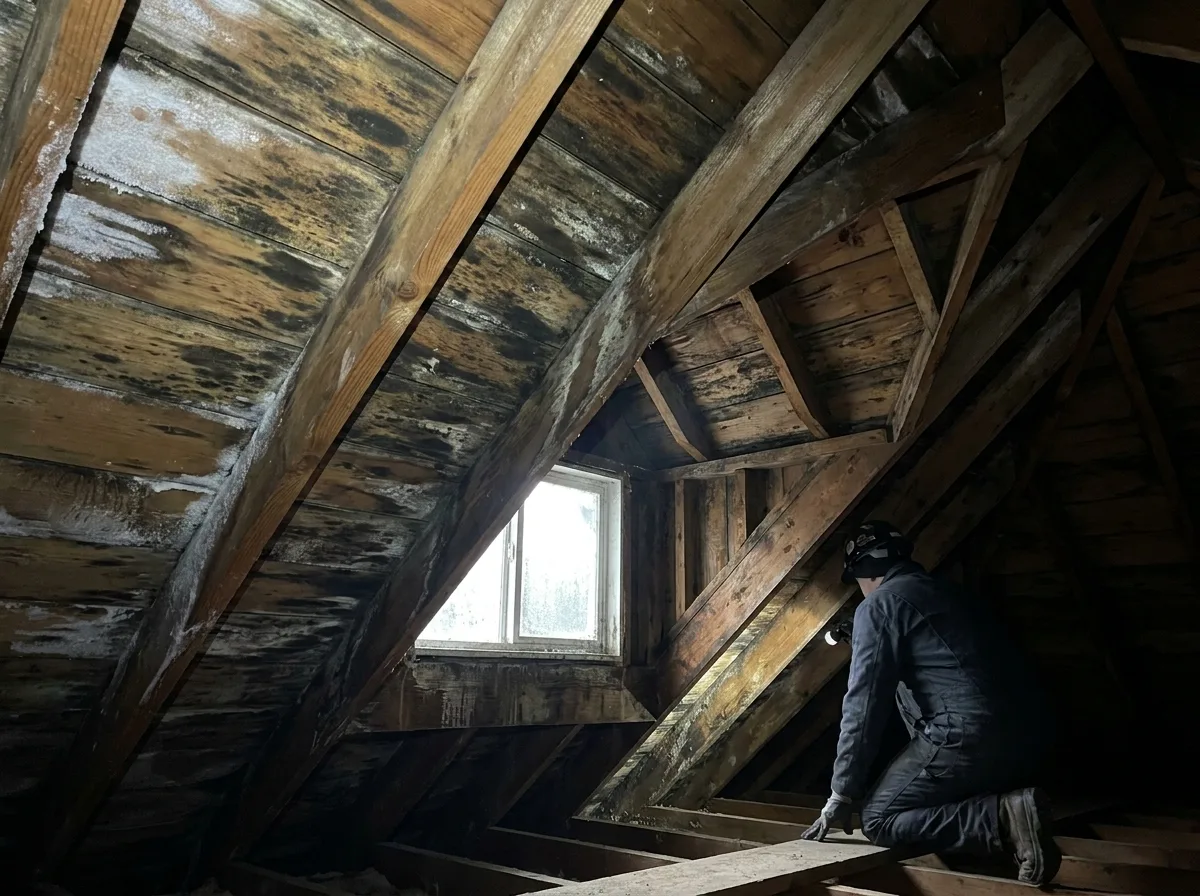
Damp sheathing, mould and ceiling stains are frequently ventilation faults rather than leaks. Identifying that correctly saves you paying for unnecessary roofing.
A simple gabled attic, a cathedral ceiling and a cut-up hip roof each need different solutions. The recommendation follows the roof you actually have.
Decking that stays damp through the winter delaminates and rots. Working ventilation is the cheapest protection a roof assembly gets.
Plenty of roofs in this region are replaced when the real fault was never the roofing. The sheathing was rotting, the ceiling was staining and the insulation was damp, but the water came from inside the house, not from the sky.
A household generates a remarkable amount of water vapour. Showers, cooking, laundry, drying clothes indoors, and simply breathing all put moisture into the air, and that warm moist air rises. Wherever the ceiling is not properly sealed, at light fittings, hatches, plumbing penetrations and the tops of interior walls, it gets into the attic.
Up there it meets the underside of the roof sheathing, which in winter is cold. The vapour condenses on it. Given a properly ventilated attic, moving air carries that moisture away before it does harm. Without ventilation, it sits, soaks into the wood and comes back as mould, delaminated plywood and eventually rot.
Greater Victoria’s climate is mild but persistently wet, with heavy October to March rainfall and long damp shoulder seasons on either side. Attics here do not get the extended cold dry spells that let an assembly dry itself out elsewhere in Canada. A roof space that is not ventilating properly stays damp for months at a time.
This is the point that gets missed. Air has to come in low and leave high. Intake at the soffits, exhaust near the ridge, and a clear path between them.
Adding exhaust vents on their own is common and counterproductive. If there is no intake to feed them, they pull replacement air from wherever it is easiest, and the easiest source is usually the heated house below. That means actively drawing warm humid indoor air into the attic, which is precisely the problem you were trying to solve.
Insulation pushed into the eaves during a top-up is the classic. Soffit vents painted over during exterior work. Soffit replaced with solid panel during a rot repair. Boarded storage laid across the attic floor. Bathroom fans discharging into the attic instead of outside, which does not block airflow but overwhelms it.
An open gabled attic with generous eaves is straightforward. A cathedral ceiling with no attic at all needs venting within each rafter bay and baffles to keep the channel clear. A cut-up hip roof has short ridge lengths and little room for conventional exhaust. Prescribing the same vent to all three is how ventilation work fails.
While the roof is open. Assessment is free and detailed, and crews are licensed, insured and WorkSafeBC covered.
How it works
Four steps, in the order they actually happen.
Where accessible, we check the sheathing underside for staining, mould and frost, and look at insulation depth, air leaks and existing vent performance.
Intake at the soffits and exhaust near the ridge are assessed together, along with anything blocking the path such as insulation pushed into the eaves.
You get a written explanation of what is failing and a specific plan, whether that means opening intake, adding exhaust or correcting a bathroom fan discharge.
Vents are fitted, blocked intake is cleared and baffled, and the completed path is checked so air genuinely moves from eave to ridge.
Questions, answered
Frost or beaded moisture on the underside of the sheathing in cold weather, dark mould staining on the decking, a musty smell, damp insulation, and rusting nail points. Ceiling stains that appear in cold snaps rather than during heavy rain are another strong indicator.
Leaks are concentrated, tied to specific rain and wind events, and usually traceable to a flashing or penetration. Condensation is spread widely across the sheathing, worst in cold weather regardless of rain, and typically comes with mould and a damp attic. Roofing work will not fix the second one.
The climate is mild but persistently damp, with heavy winter rainfall and long humid shoulder seasons. Attics here rarely get the extended dry, cold spells that keep moisture levels down elsewhere, so an assembly that cannot dry itself stays wet for months and decays accordingly.
It can. Exhaust vents without matching soffit intake will draw the air they need from the easiest available source, which is often the heated house below through ceiling penetrations. That pulls warm humid indoor air straight into the attic, which is the opposite of what you want.
Outside the building envelope, through the roof or a wall, never into the attic. A bathroom fan venting into an attic delivers a continuous supply of warm humid air onto cold sheathing, and it is one of the most common causes of severe attic moisture found during roof work.
Related work
A close assessment of roofing materials, flashing, ventilation, drainage and penetrations, with findings you can actually plan around.
Replacing aging cedar shake roofing with a modern system, including the skip-sheathing and decking work these conversions almost always require.
Repair and replacement of rotted or damaged soffit and fascia, restoring the roof edge along with the ventilation and drainage that depend on it.
Tell us your name, how to reach you and what the roof is doing. We will come and look at it, then put the scope, the materials and the labour in writing before anything begins.
Mon–Fri 7:00am–5:00pm · Saturday by appointment
Thank you — your enquiry has come through. We will be in touch to arrange a site visit and go over the details. If the situation is urgent, call us directly rather than waiting on a reply.
(778) 562-5640Ready when you are
Book a ventilation assessment and find out whether you have a leak or a moisture problem.