Roof Repair
Focused repairs to shingles, flashing, vents and roof penetrations that restore weather protection without replacing a roof that still has life in it.
Learn more
Roofing service
Water rarely enters where it appears, so finding the actual entry point matters more than sealing the visible damage.
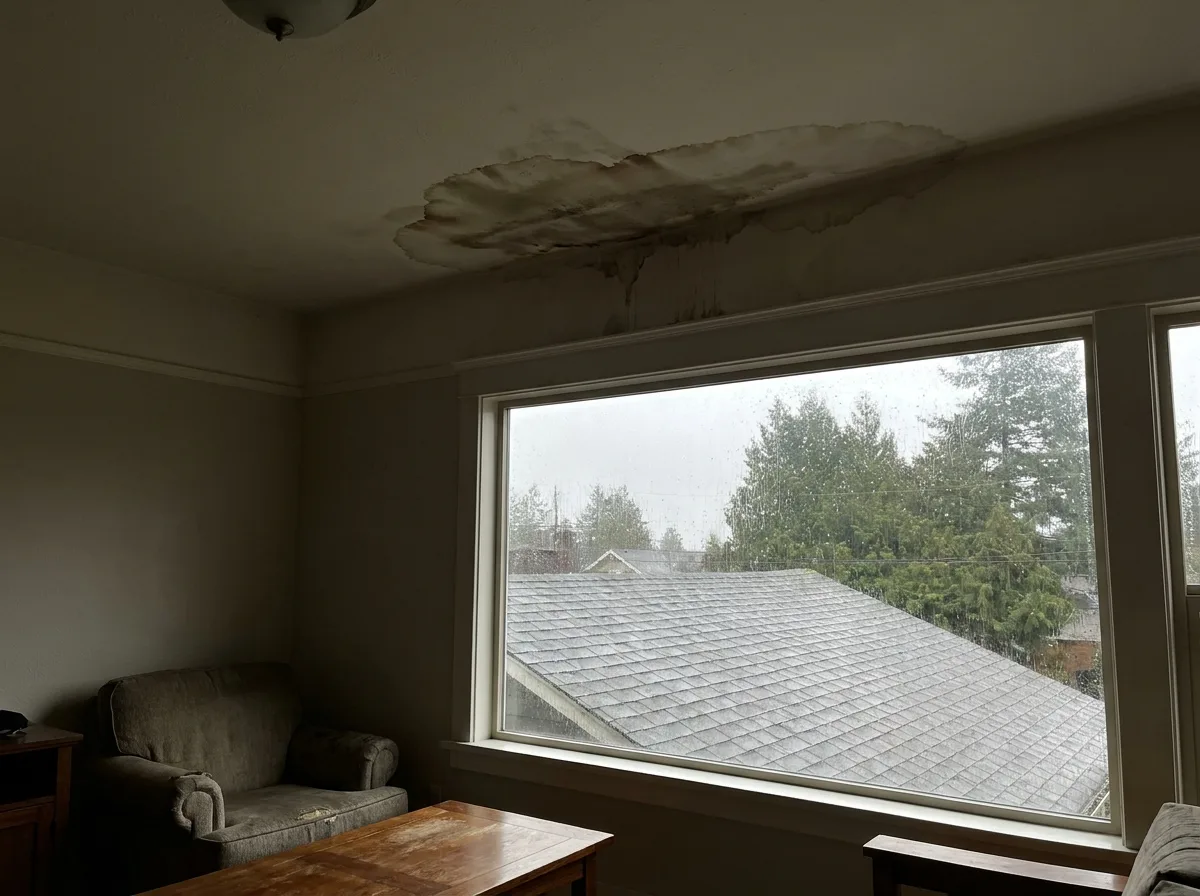
The work starts with finding the source of the leak rather than patching whatever is directly above the stain on your ceiling.
Water travels along rafters, sheathing and wiring before it drops. The investigation follows that path back uphill instead of stopping at the ceiling stain.
A leak that has already been patched twice usually means the wrong thing was patched. Those get a fresh diagnosis rather than a third layer of sealant.
Where the attic is accessible, the underside of the sheathing tells the clearest story: staining, rot patterns and condensation each look different.
Many suspected leaks in this climate are attic condensation. Identifying that early saves you paying for roofing work that would not have fixed anything.
A leak is a detective problem before it is a roofing problem. The stain on your ceiling marks where water gave up travelling, not where it got in, and the two can be a long way apart.
Rain enters at a compromised detail, usually a flashing, a penetration or a lifted edge. It then meets the underside of the sheathing and follows the slope, running along rafters, truss chords and even electrical cable until something interrupts it, at which point it drops into the insulation and eventually shows on drywall.
That travel is why the tempting fix, sealing the roof directly above the stain, so often fails. It also explains leaks that seem to move: change the wind direction and the water takes a different route through the same assembly.
Chimney counter flashing on older homes, where mortar joints have weathered. Step flashing at roof-to-wall junctions, particularly on dormers and additions. Cracked or UV-degraded plumbing vent boots. Valleys packed with fir needles and Garry oak debris, which dam water sideways under the shingles. Skylight head flashing. Old cedar shake roofs where the shakes have thinned and split.
A meaningful share of suspected roof leaks in this region are attic condensation. Warm humid indoor air rises into a cold, poorly ventilated attic, condenses on the sheathing and drips back down. It stains ceilings, wets insulation and rots decking in exactly the way a leak does.
The tells are different, though. Condensation is diffuse rather than concentrated, worst in cold snaps rather than during the heaviest rain, and usually paired with mould and a musty attic. Roofing work will not fix it. Correcting intake and exhaust ventilation will.
A useful leak call includes the attic wherever it can be reached, because the underside of the sheathing records the history: old dry stains, active wet patches, rust trails at fasteners, rot around a particular penetration. Combined with what the roof surface shows and when you observe the drip, that usually resolves the question.
The failed detail gets opened, the sheathing beneath it is checked for softness, and the assembly is rebuilt to shed water by geometry rather than relying on a bead of caulking to hold the line. You get told what failed and why. Crews are licensed, insured and WorkSafeBC covered, and quotes are free and detailed.
How it works
Four steps, in the order they actually happen.
When it drips, in which wind and rain conditions, and how long it has been happening all narrow the search before anyone climbs a ladder.
The roof surface, penetrations, flashings and the attic underside are examined together to locate the entry point rather than the exit point.
The failed detail is opened up, the sheathing beneath it is checked for rot, and the assembly is rebuilt so water sheds the way it was meant to.
You get a plain explanation of what was leaking and why, plus anything else found along the way that is worth watching.
Roof condition
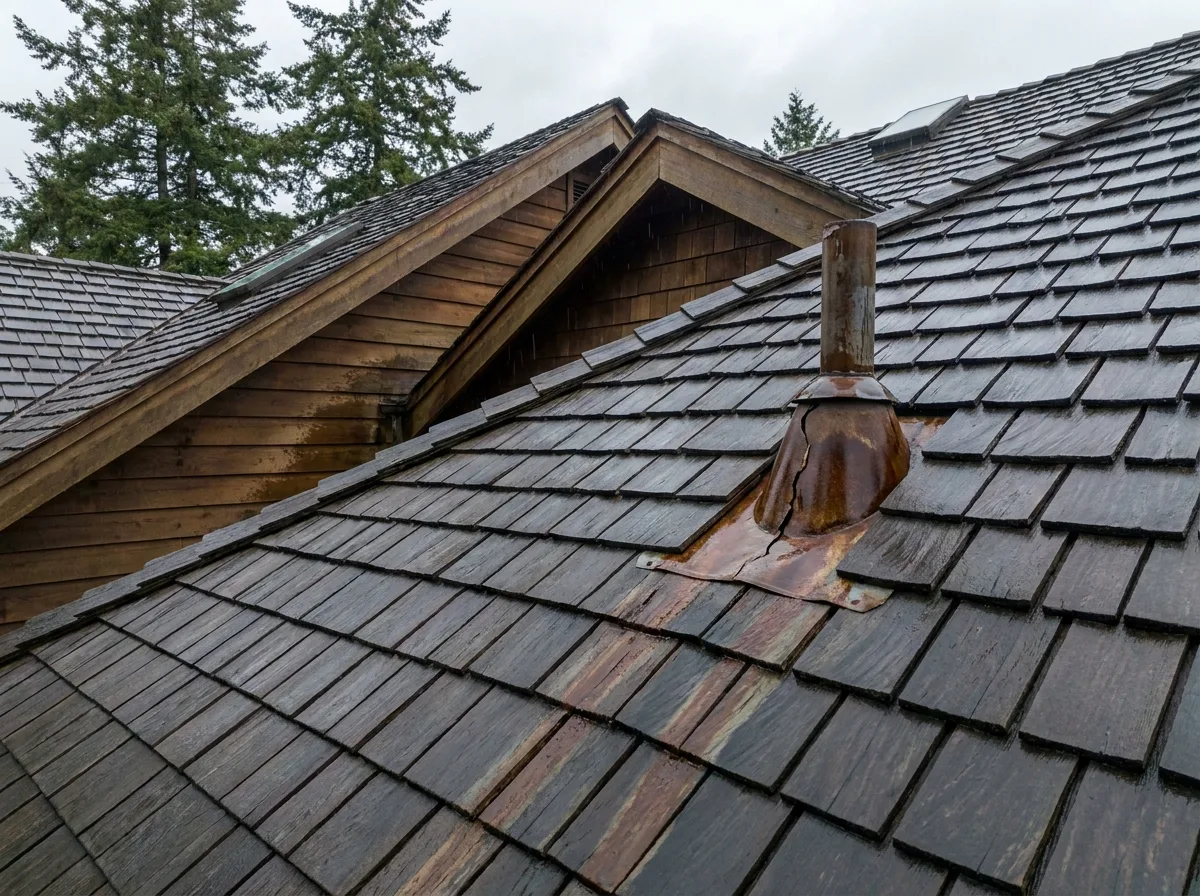
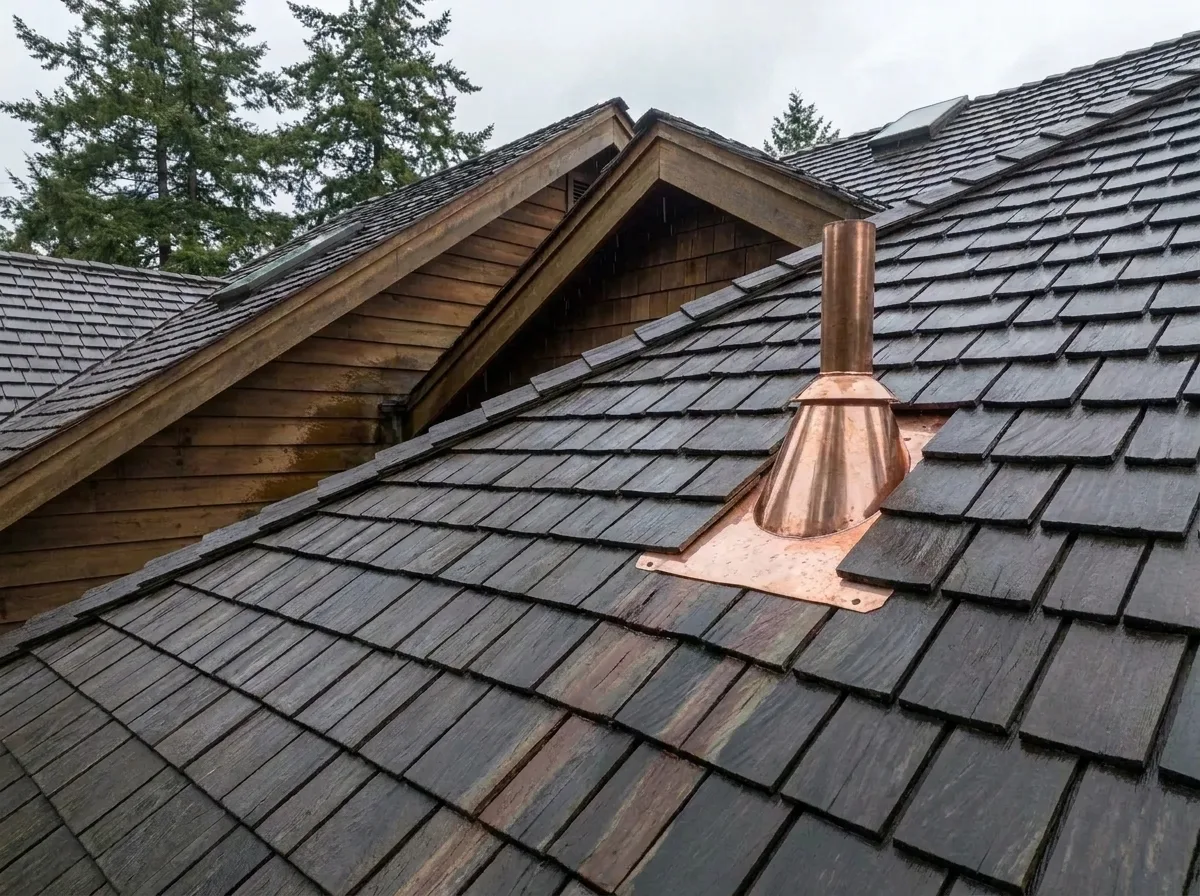
A failed penetration detail beside a corrected one. Most leaks trace back to flashing and penetrations rather than the field of the roof.
Photographs are illustrative of typical roof conditions in Greater Victoria and are not a record of work performed by Capital Roofing Victoria.
Questions, answered
Wind-driven rain is the usual answer. A detail that sheds vertical rain perfectly can let water in when a southeasterly pushes it sideways and uphill under shingle edges or behind wall cladding. Leaks that appear only in specific wind directions point strongly at flashing and roof-to-wall junctions.
Almost always somewhere higher and often several metres away. Water enters at a penetration or flashing, runs down the underside of the sheathing or along a rafter, and drops at the first low point or fastener it reaches. That is why patching directly above the stain so often fails.
It is a genuine possibility in a damp coastal climate. Condensation typically shows as widespread dampness or frost on the sheathing underside, is worst in cold weather rather than during heavy rain, and is often accompanied by dark mould staining. Rain leaks tend to be concentrated and tied to specific storms.
Get it looked at. Water in a roof assembly does its damage continuously, soaking insulation, rotting sheathing and feeding mould long before you notice the ceiling. If water is actively coming in, that is an emergency callout, and temporary protection can be put in place before the permanent repair.
Put a container under the drip and move anything valuable clear. If a ceiling is bulging with trapped water, a small relief hole at the low point drains it in a controlled way and prevents a larger collapse. Do not go on a wet roof yourself, particularly a mossy or steep one.
Related work
Focused repairs to shingles, flashing, vents and roof penetrations that restore weather protection without replacing a roof that still has life in it.
Repairs for storm damage, active leaks and roofs that need securing, focused on stopping water intrusion before anything else.
Diagnosis and repair of leaking skylights — flashing failures, debris damming, failed seals, and the condensation that gets mistaken for all three.
Tell us your name, how to reach you and what the roof is doing. We will come and look at it, then put the scope, the materials and the labour in writing before anything begins.
Mon–Fri 7:00am–5:00pm · Saturday by appointment
Thank you — your enquiry has come through. We will be in touch to arrange a site visit and go over the details. If the situation is urgent, call us directly rather than waiting on a reply.
(778) 562-5640Ready when you are
Book an inspection and get a clear written explanation of where the water is entering.